
Planting Guide
Wildflower Seeds
This seed mix contains a blend of annual and perennial wildflowers commonly grown across North America, chosen for their natural beauty, seasonal blooms, and ability to support pollinators.
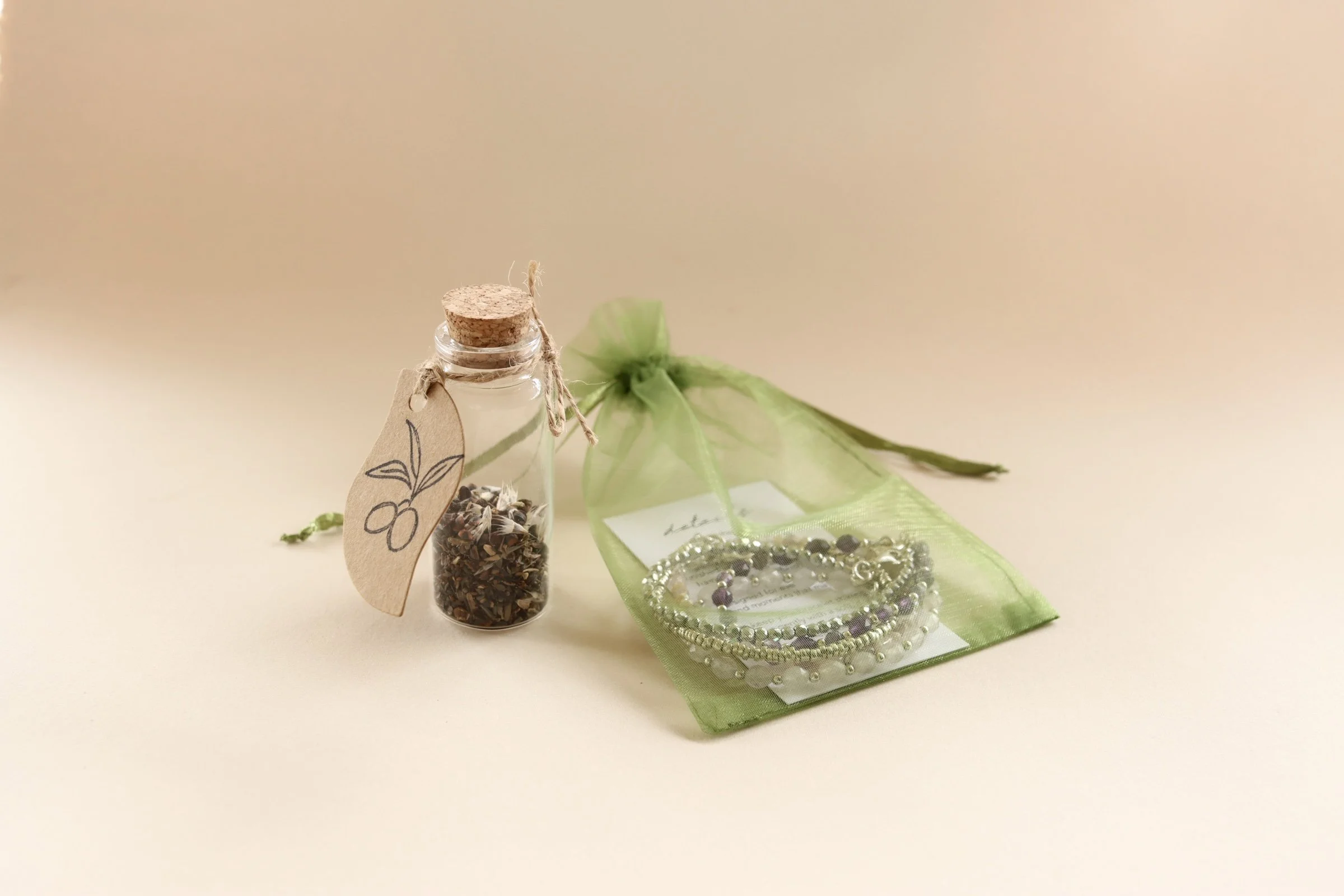
Plant Something Meaningful
Just like the bracelet, the seeds are meant to be a reminder that growth takes time, patience, and care. Plant them as a symbol of gratitude, new beginnings, or a season of change and watch something beautiful take root.
Because this is a mixed blend, exact varieties may vary.
-
About the Native North American Wildflower Seed Mix
20 varieties
This wildflower seed mix contains a blend of annual and perennial species native to North America. The mix includes many well-known wildflowers such as lupine, columbine, coreopsis, coneflower, and other classic meadow and pollinator favorites.
These flowers are commonly grown throughout the United States and are suitable for planting in most regions of North America when grown in the proper conditions.
This mix is packaged in small portions for gifting and symbolic planting.
Mix Contents
Approximately 50% Annual / 50% Perennial
Columbine Seeds – McKana Giant Mix (Aquilegia hybrida)
Lance-Leaf Coreopsis Seeds (Coreopsis lanceolata)
Plains Coreopsis Seeds (Coreopsis tinctoria)
Purple Coneflower Seeds (Echinacea purpurea)
California Poppy Seeds – Orange (Eschscholzia californica)
Blanket Flower Seeds (Gaillardia aristata)
Indian Blanket Seeds (Gaillardia pulchella)
Birds Eyes Seeds (Gilia tricolor)
Gayfeather / Blazing Star Seeds (Liatris spicata)
Perennial Blue Flax Seeds (Linum lewisii)
Annual Blue Flax Seeds (Linum usitatissimum)
Wild Perennial Lupine Seeds (Lupinus perennis)
Arroyo Lupine Seeds (Lupinus succulentus)
Lemon Mint Seeds (Monarda citriodora)
Fivespot Seeds (Nemophila maculata)
Rocky Mountain Penstemon Seeds (Penstemon strictus)
California Bluebell Seeds (Phacelia campanularia)
Annual Phlox Seeds – Red (Phlox drummondii)
Mexican Hat Seeds (Ratibida columnifera)
Black Eyed Susan Seeds (Rudbeckia hirta)
Seeds are sourced from a third-party supplier and repackaged in small quantities for gifting. Two Olives is not the grower or breeder of these seeds.
-
When to Plant Wildflower Seeds
Wildflower seeds can usually be planted in fall or spring, depending on your climate.
Fall planting allows seeds to experience natural winter conditions that help some varieties germinate.
Spring planting should be done after the danger of frost has passed and soil has begun to warm.
Choose a location that receives several hours of sunlight each day for best results.
-
How to Plant
Choose a sunny outdoor location with well-drained soil
Remove weeds and loosen the top layer of soil
Scatter seeds evenly over the soil surface
Lightly press seeds into the soil without burying deeply
Water gently after planting
Keep soil lightly moist until seedlings appear
Many wildflower seeds need light to germinate, so they should not be planted too deep.
Wildflowers grow best when planted directly outdoors rather than started indoors.
-
Growing Tips
Wildflowers grow best in areas with plenty of sunlight.
Avoid heavy fertilizing, as many wildflowers prefer average soil.Water during early growth, then reduce watering once plants are established.
Annual flowers may bloom the first year, while some perennials may take longer to fully establish.
Allow flowers to go to seed at the end of the season if you would like them to reseed naturally.
-
Growing in Containers
Wildflower mixes can be grown in containers, but results may vary depending on pot size and sunlight.
Use a container with drainage holes
Use regular potting soil
Place in full sunWater regularly while plants are young
Larger containers will produce better results than very small pots.

Performs best in full sun; tolerates partial shade in most climates.
Water after sowing and keep soil lightly moist until established.
Prefers well-draining soil but adapts easily to open or naturalized areas.
Grows 12-30 inches tall depending on mix of annuals and perennials.
Features
Life Cycle
Annual & Perennial Mix
Planting Season
Fall or Spring
Bloom Season
Summer through Fall
Difficulty
Easy to grow
Color
Mixed
Plant Characteristics
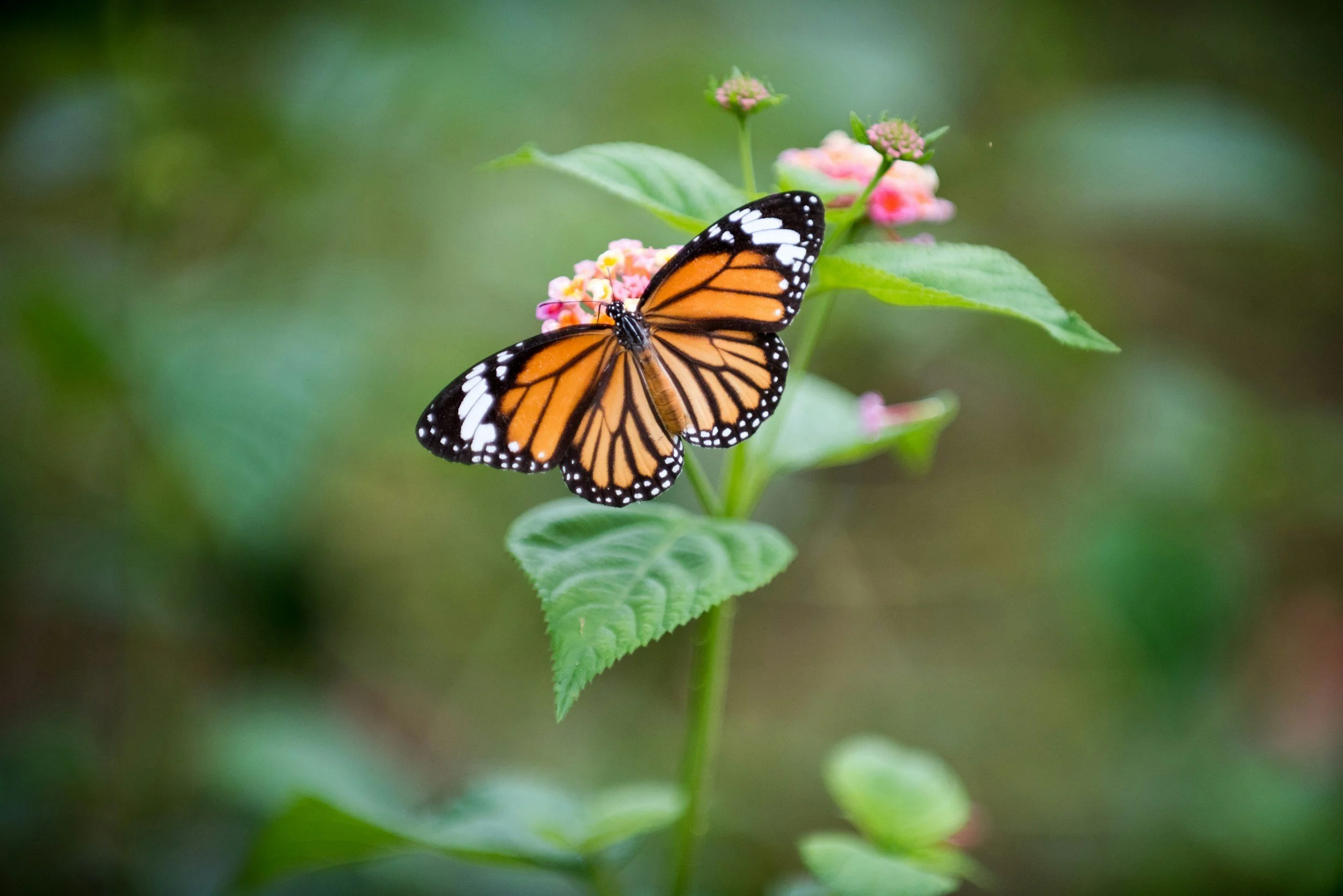
Attracts bees, butterflies, hummingbirds, and pollinators
Growing Location
Outdoor planting recommended
Garden Use
Garden beds, containers, borders, wildflower patches, cut flowers
Wildlife Resistance
May be somewhat deer resistant, but results vary
Hardiness Zones
3, 4, 5, 6, 7, 8, 9, 10